

Blind recruitment focused on what candidates can do
Base the initial screening on what matters for the role — candidates’ skills, motivation and approach.
Caseflow gives you a consistent, job-relevant basis for deciding who should move forward.
Assess candidates on their skills, motivation and approach – and establish a consistent, job-relevant basis for the initial selection process.
Blind recruitment focused on what candidates can do
Assess candidates on their skills, motivation and approach – and establish a consistent, job-relevant basis for the initial selection process.
Why HR teams choose Caseflow for blind recruitment


Focus on skills rather than CVs
Candidates are evaluated based on their responses to job-related scenarios rather than their name, photo, educational background or ability to write a traditional application.


A more consistent basis for evaluation
Every candidate completes the same job-related assessment and is evaluated against consistent criteria defined in advance and linked directly to the role.

More relevant candidates considered
Candidates who may be overlooked during traditional CV screening are given the opportunity to demonstrate their potential, motivation and approach to situations they may encounter in the role.

Less manual screening
Caseflow structures and evaluates candidate responses, making it easier to compare applicants and identify those who best match the predefined job criteria.

What is blind recruitment?
What is blind recruitment?
Blind recruitment means removing or hiding personal information that should not determine whether a candidate is capable of performing the job.
This may include names, age, gender, photos and other information that can influence an initial evaluation before the candidate has had the opportunity to demonstrate their skills.
With Caseflow, anonymisation is combined with a job-related assessment. Candidates are therefore not simply evaluated without their identity. They are evaluated based on how they respond to the same relevant scenarios and criteria.
Blind recruitment means removing or hiding personal information that should not determine whether a candidate is capable of performing the job.
This may include names, age, gender, photos and other information that can influence an initial evaluation before the candidate has had the opportunity to demonstrate their skills.
With Caseflow, anonymisation is combined with a job-related assessment. Candidates are therefore not simply evaluated without their identity. They are evaluated based on how they respond to the same relevant scenarios and criteria.


It’s not just what you see, but what you assess.
It’s not just what you see, but what you assess.
Removing a name and photo from a CV does not necessarily make the screening process objective.
A CV still places emphasis on previous job titles, education, employers, career history and the ability to write a traditional application. Relevant candidates may therefore be rejected before they have had the opportunity to show how they would actually approach the role.
Blind recruitment is most effective when anonymisation is combined with an evaluation method that is:
directly related to the job
consistent for every candidate
structured in advance
easy to compare
based on relevant responses rather than intuition
This is where blind recruitment and case-based recruitment work together.
Removing a name and photo from a CV does not necessarily make the screening process objective.
A CV still places emphasis on previous job titles, education, employers, career history and the ability to write a traditional application. Relevant candidates may therefore be rejected before they have had the opportunity to show how they would actually approach the role.
Blind recruitment is most effective when anonymisation is combined with an evaluation method that is:
Directly related to the job
Consistent for every candidate
Structured in advance
Easy to compare
Based on relevant responses rather than intuition
What our customers say about recruiting with Caseflow
We needed to fill a permanent role that has been hard to recruit for. With Caseflow, we had a more targeted process and aligned expectations before interviews, inviting only relevant candidates. We hired someone we likely wouldn’t have reached otherwise - six months later, it’s still working very well.Gertrud Abrahamsson
Head of Housekeeping, Dragør Municipality




Normally, we are happy if we can hire just one new applicant, but with the use of Caseflow, we received a total of 21 applicants, 13 of whom were trained SSA. Caseflow provided a completely different starting point for the interviews, where we could talk based on professional reflections instead of classic application texts. The applicants themselves also found the method to be fair and innovative.
Jonas Hjort Ibsen
Teamleder for Frivillighed, Børns Vilkår

Normally, we are happy if we can hire just one new applicant, but with the use of Caseflow, we received a total of 21 applicants, 13 of whom were trained SSA. Caseflow provided a completely different starting point for the interviews, where we could talk based on professional reflections instead of classic application texts. The applicants themselves also found the method to be fair and innovative.
Helle Wehrs
Teamleder, Team Hastrup

We experienced faster screening and lower resource use – even with 550 applicants. Blind recruitment gave us access to candidates we otherwise wouldn’t have found, and working with Caseflow proved highly valuable. I highly recommend Caseflow to others seeking a more efficient recruitment process.Kim Nielsen
HR Forretningspartner i Ase

Assessing candidates solely by their CVs is insufficient. With Caseflow, we quickly gained clear insights into candidates’ preferences—such as salary expectations, working conditions—and their skills in different negotiation scenarios. This made it far easier to identify who was truly suited for the role.
Kristian Tønnes
Adm. direktør, Celltech A/S

Caseflow made the recruitment process easier, faster, and more manageable. We received help with writing job ads and using their case and candidate reports, which gave us a solid foundation for evaluating applicants and conducting interviews. An affordable and professional solution I highly recommend.Gitte Severin
Department Head, Næstved Municipality

With Caseflow, we received 16 qualified applicants for a position where we normally get 3–4. That led to four new colleagues — and a recruitment process that both applicants and the panel praised for being structured, fair, and personal.
Lene Haahr
Head Nurse, Køge Anæstesiafdeling

We went from zero to two hires in an otherwise difficult position — and received 123 applications. Caseflow gave us both an efficient screening process and a professional experience that candidates noticed.Jens Trandum
HR Manager, M.J. Eriksson

We needed to fill a permanent role that has been hard to recruit for. With Caseflow, we had a more targeted process and aligned expectations before interviews, inviting only relevant candidates. We hired someone we likely wouldn’t have reached otherwise - six months later, it’s still working very well.Gertrud Abrahamsson
Head of Housekeeping, Dragør Municipality
Normally, we are happy if we can hire just one new applicant, but with the use of Caseflow, we received a total of 21 applicants, 13 of whom were trained SSA. Caseflow provided a completely different starting point for the interviews, where we could talk based on professional reflections instead of classic application texts. The applicants themselves also found the method to be fair and innovative.
Jonas Hjort Ibsen
Teamleder for Frivillighed, Børns Vilkår
Normally, we are happy if we can hire just one new applicant, but with the use of Caseflow, we received a total of 21 applicants, 13 of whom were trained SSA. Caseflow provided a completely different starting point for the interviews, where we could talk based on professional reflections instead of classic application texts. The applicants themselves also found the method to be fair and innovative.
Helle Wehrs
Teamleder, Team Hastrup
We experienced faster screening and lower resource use – even with 550 applicants. Blind recruitment gave us access to candidates we otherwise wouldn’t have found, and working with Caseflow proved highly valuable. I highly recommend Caseflow to others seeking a more efficient recruitment process.Kim Nielsen
HR Forretningspartner i Ase
Assessing candidates solely by their CVs is insufficient. With Caseflow, we quickly gained clear insights into candidates’ preferences—such as salary expectations, working conditions—and their skills in different negotiation scenarios. This made it far easier to identify who was truly suited for the role.
Kristian Tønnes
Adm. direktør, Celltech A/S
Caseflow made the recruitment process easier, faster, and more manageable. We received help with writing job ads and using their case and candidate reports, which gave us a solid foundation for evaluating applicants and conducting interviews. An affordable and professional solution I highly recommend.Gitte Severin
Department Head, Næstved Municipality
With Caseflow, we received 16 qualified applicants for a position where we normally get 3–4. That led to four new colleagues — and a recruitment process that both applicants and the panel praised for being structured, fair, and personal.
Lene Haahr
Head Nurse, Køge Anæstesiafdeling
We went from zero to two hires in an otherwise difficult position — and received 123 applications. Caseflow gave us both an efficient screening process and a professional experience that candidates noticed.Jens Trandum
HR Manager, M.J. Eriksson
We needed to fill a permanent role that has been hard to recruit for. With Caseflow, we had a more targeted process and aligned expectations before interviews, inviting only relevant candidates. We hired someone we likely wouldn’t have reached otherwise - six months later, it’s still working very well.
Gertrud Abrahamsson
Head of Housekeeping,
Dragør Kommune
Vi brugte Caseflow i rekrutteringen af en salgskonsulent og oplevede et meget velfungerende forløb fra start til slut. Vi fik flere ansøgere end normalt – og mange stærke kandidater. Casen gjorde det lettere at vurdere motivation og forudsætninger for jobbet og forkortede screeningsfasen. Kandidaterne var også positive, fordi de fik et mere realistisk indblik i jobbet. Vi ansatte en stærk kandidat og vil gerne bruge Caseflow igen.
Jonas Hjort Ibsen
HR Forretningspartner i Ase
Normally, we are happy if we can hire just one new applicant, but with the use of Caseflow, we received a total of 21 applicants, 13 of whom were trained SSA. Caseflow provided a completely different starting point for the interviews, where we could talk based on professional reflections instead of classic application texts. The applicants themselves also found the method to be fair and innovative.
Helle Wehrs
Teamleder, Team Hastrup
Køge Kommune
Assessing candidates solely by their CVs is insufficient. With Caseflow, we quickly gained clear insights into candidates’ preferences—such as salary expectations, working conditions—and their skills in different negotiation scenarios. This made it far easier to identify who was truly suited for the role.
Kristian Tønnes
Adm. direktør
Celltech A/S
We experienced faster screening and lower resource use – even with 550 applicants. Blind recruitment gave us access to candidates we otherwise wouldn’t have found, and working with Caseflow proved highly valuable. I highly recommend Caseflow to others seeking a more efficient recruitment process.
Kim Nielsen
Teamleder for Frivillighed
Børns Vilkår
Caseflow made the recruitment process easier, faster, and more manageable. We received help with writing job ads and using their case and candidate reports, which gave us a solid foundation for evaluating applicants and conducting interviews. An affordable and professional solution I highly recommend.
Gitte Severin
Department Head,
Næstved Municipality
With Caseflow, we received 16 qualified applicants for a position where we normally get 3–4. That led to four new colleagues — and a recruitment process that both applicants and the panel praised for being structured, fair, and personal.
Lene Haahr
Head Nurse,
Køge Anæstesiafdeling
We went from zero to two hires in an otherwise difficult position — and received 123 applications. Caseflow gave us both an efficient screening process and a professional experience that candidates noticed.Jens Trandum
HR Manager
M.J. Eriksson

How blind recruitment works with Caseflow
Tell us a little about the role and your organisation - we take care of the rest.
Du får individuelle kandidat-rapporter med spørgeguide
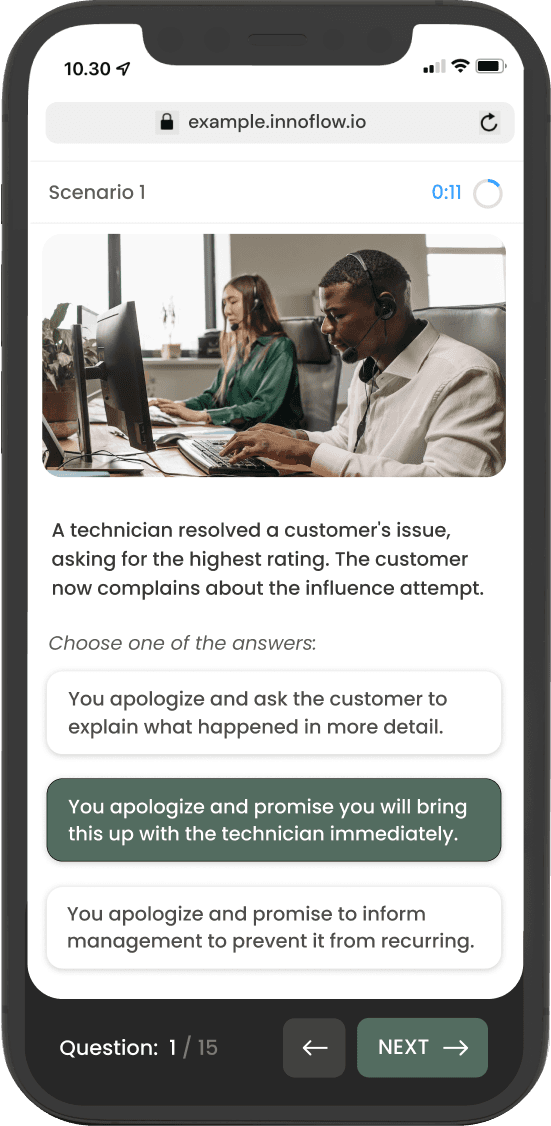
We turn the role into short, realistic scenarios that reflect the actual job.
Fortæl os lidt om jobbet og virksomheden - vi klarer resten
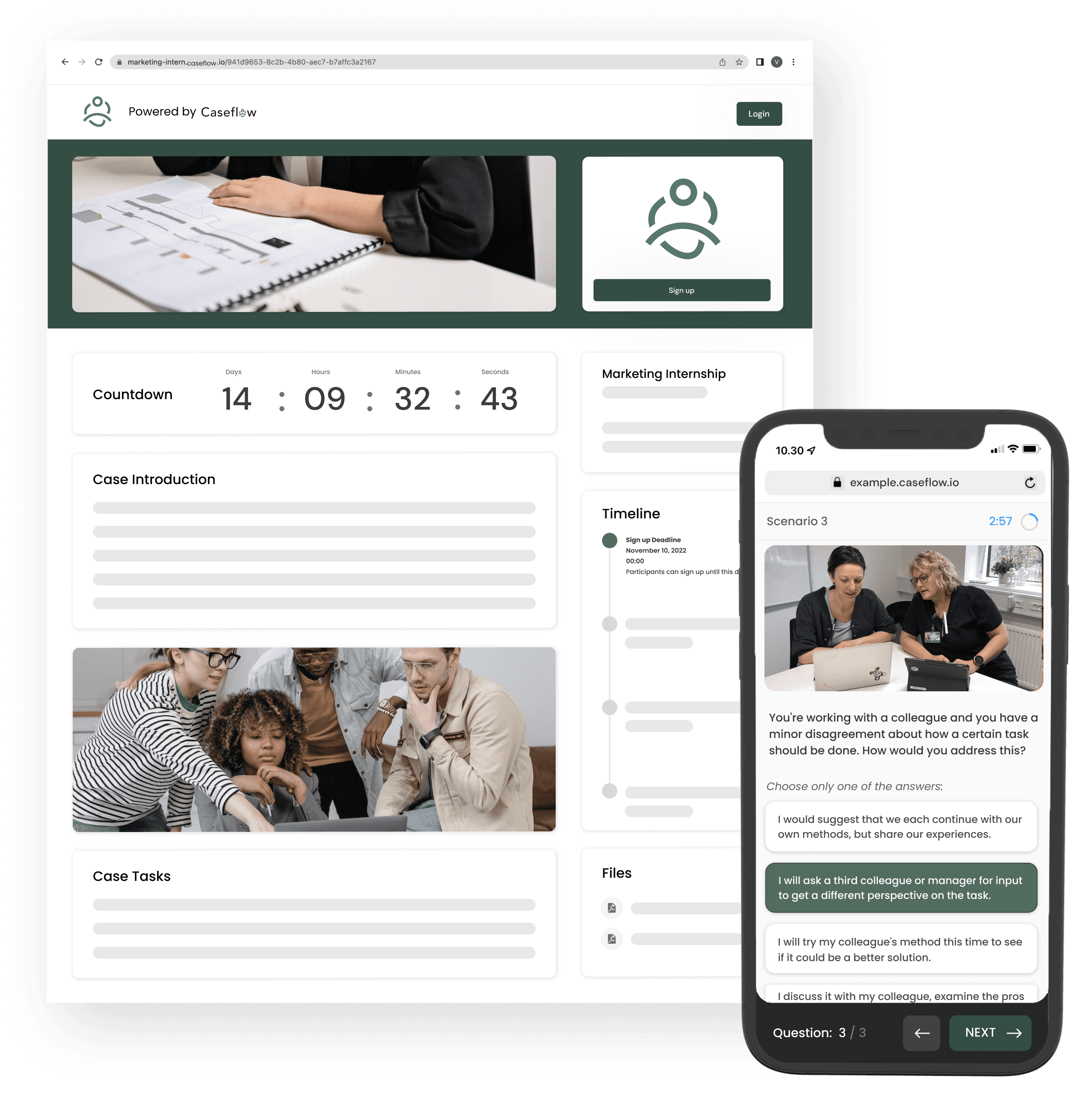
Candidates respond on their phone in around 15 minutes — no CV or application required.
Vi udarbejder en skræddersyet case, og et opslag der tiltrækker
All candidates are assessed against the same predefined, job-related criteria.
Ansøgere løser casen online på 15 minutter - alle får feedback
Compare the results and invite the most relevant candidates to the next stage.
Scoringer tildeles automatisk - du får besked, når der er match


Role requirements

Blind, skills-based screening


Better hires — without CV bias

Blind recruitment built around job-relevant skills
Blind recruitment built around job-relevant skills
Reduce the influence of CVs and personal information, attract a broader range of candidates and evaluate everyone against the same job-related criteria.
A fairer, simpler process that improves the quality of the initial screening.
Reduce the influence of CVs and personal information, attract a broader range of candidates and evaluate everyone against the same job-related criteria.
A fairer, simpler process that improves the quality of the initial screening.

A better experience for candidates
A better experience for candidates
A better experience for candidates
Give candidates the opportunity to demonstrate more than their CV and gain a realistic impression of the role through a short, job-related assessment.
Give candidates the opportunity to demonstrate more than their CV and gain a realistic impression of the role through a short, job-related assessment.
88 %
88 %
A fantastic application experience
88 % have a good or excellent experience when applying via Caseflow.
88 % have a good or excellent experience when applying via Caseflow.
80%
80%
Better insight into jobs and better job matches
80 % gain a better understanding of the job and feel that this results in a better match.
80 % gain a better understanding of the job and feel that this results in a better match.
" The process is relevant and focuses on skills, not background "
" The process is relevant and focuses on skills, not background "
~Applicant via Caseflow
~Applicant via Caseflow
~Applicant via Caseflow


" A bold and innovative way to look for a job "
" A bold and innovative way to look for a job "
" A bold and innovative way to look for a job "
~Applicant via Caseflow
~Applicant via Caseflow
84%
84%
I’m more motivated by case studies than CVs
84 % feel more motivated by solving a case study than by writing a CV and application letter.
84 % feel more motivated by solving a case study than by writing a CV and application letter.
88 %
88 %
Perceived as fair and inclusive
88 % find the application process fair and inclusive.
88 % find the application process fair and inclusive.

What is blind recruitment?
Blind recruitment means removing or hiding personal information that should not determine whether a candidate is capable of performing the job.
This may include names, age, gender, photos and other information that can influence an initial evaluation before the candidate has had the opportunity to demonstrate their skills.
With Caseflow, anonymisation is combined with a job-related assessment. Candidates are therefore not simply evaluated without their identity. They are evaluated based on how they respond to the same relevant scenarios and criteria.
It’s not just what you see, but what you assess.
Removing a name and photo from a CV does not necessarily make the screening process objective.
A CV still places emphasis on previous job titles, education, employers, career history and the ability to write a traditional application. Relevant candidates may therefore be rejected before they have had the opportunity to show how they would actually approach the role.
Blind recruitment is most effective when anonymisation is combined with an evaluation method that is:
Directly related to the job
Consistent for every candidate
Structured in advance
Easy to compare
Based on relevant responses rather than intuition
Frequently asked questions
What does blind recruitment mean?
Blind recruitment means hiding selected personal information so candidates can be evaluated without factors such as their name, age, gender or photo influencing the initial screening.
Is blind recruitment the same as anonymous recruitment?
The terms are often used interchangeably. Anonymous recruitment usually refers specifically to hiding personal information, while blind recruitment may describe a broader process focused on evaluating candidates independently of identity and background.
Can blind recruitment be carried out using CVs?
Parts of a CV can be anonymised, but information about education, previous employers and career history may still influence the initial screening.
Caseflow therefore uses job-related assessments as the primary basis for the first selection.
The CV can still provide useful context later in the process, when preparing for interviews.
When do we see the candidate’s identity?
This depends on how the process is configured. The identity can, for example, be revealed once candidates have been selected for an interview.
Is blind recruitment relevant for every role?
It is particularly useful when specific skills, priorities or work situations can be identified and assessed consistently. The assessment should always be adapted to the role.



See how blind recruitment could work in your organisation
During a short consultation, we will show you how a job-related assessment can be used to attract, screen and select candidates on a more relevant and consistent basis.
You will also receive an initial assessment of how the method could fit into your existing recruitment process.
Would you like to hear more?
Send us a message and we’ll get back to you within 24 hours
Spend 51% less time on hiring process
Caseflow enables a strategic approach to attract and hire key candidates, allowing you saving time in actively sourcing and narrowing down the ideal candidate profile.
See how blind recruitment could work in your organisation
During a short consultation, we will show you how a job-related assessment can be used to attract, screen and select candidates on a more relevant and consistent basis.
You will also receive an initial assessment of how the method could fit into your existing recruitment process.
Would you like to hear more?
Send us a message and we’ll get back to you within 24 hours
Spend 51% less time on hiring process
Caseflow enables a strategic approach to attract and hire key candidates, allowing you saving time in actively sourcing and narrowing down the ideal candidate profile.
Book gratis demo
Planlæg en 30-minutters produktdemo med Q&A eksperter